The ROMULUS ClickFix RAT Has a Name Now: CNCMachineRMS. We Already Held 16 of Blackpoint's 23 Indicators. Here Are the 7 We Didn't, and How to Hunt It
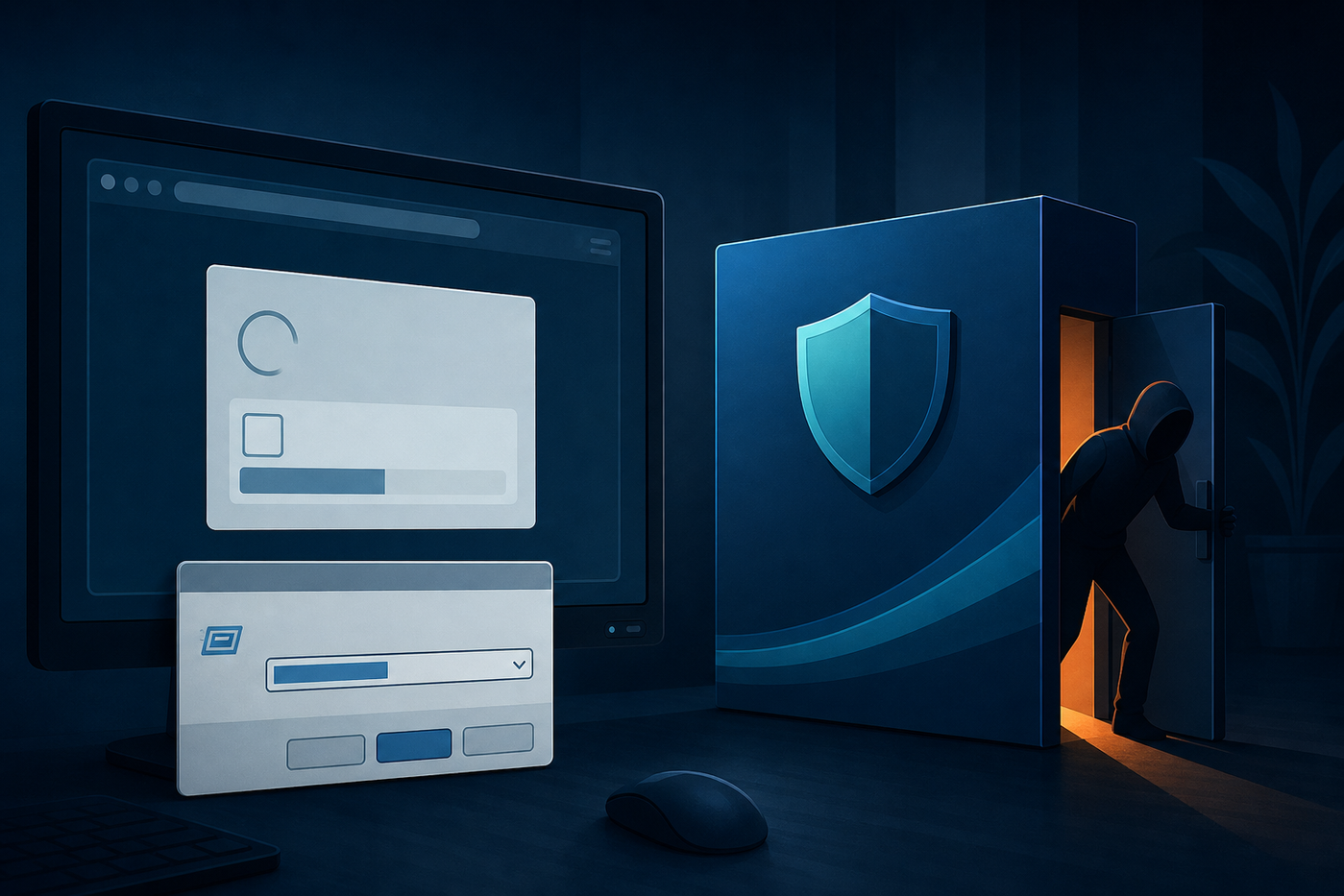
Block the ROMULUS command-and-control hosts below, tell every user that no real "verify you are human" check ever asks them to paste anything into Win+R, PowerShell or Terminal, and hunt for a program called "Stardock DeElevation Tool" that starts itself from your users' AppData folder. That is the remote access trojan that Blackpoint Cyber has now identified as CNCMachineRMS, delivered by the ROMULUS ClickFix platform. It gives the operator remote desktop control, screen streaming, microphone and camera capture, file management, and the ability to run more malware on demand.
This is the third time we have written about this chain. On October 2 we covered Huntress's report on fake ChatGPT Custom GPTs handing out an unnamed RAT. On October 20 we covered Forescout's ROMULUS report and Siemens' warning about its signed software being abused the same way. What is new this week is the name of the RAT, its C2 resolution over DNS over HTTPS, two Cloudflare-lookalike C2 domains, and more servers. Of Blackpoint's 23 hard indicators, 16 were already in our index, every one from somebody else's research or a community feed. We added the other 7 today.
What to do today
- Tell users, in one sentence: never paste a command from a web page into the Run box (Win+R), PowerShell, Windows Terminal or the macOS Terminal. A real CAPTCHA never asks. If a page asks, close it and tell IT.
- Turn the Run dialog off for users who do not need it (Group Policy: "Remove Run menu from Start Menu", which also disables Win+R).
- Block the network indicators in the list below at your firewall, proxy and DNS filter, and search your logs for them back to September.
- Watch for DNS over HTTPS from the wrong process. Blackpoint says the RAT "supports DNS over HTTPS (DoH) to resolve its active Gate." DoH from a browser is normal. DoH from DeElevate64.exe, or from anything in AppData, is not.
How to hunt it
1. What did the user paste? Windows records commands typed into the Run box in the registry, per user, at HKCU\Software\Microsoft\Windows\CurrentVersion\Explorer\RunMRU. On a suspect machine, read that key (or each user's NTUSER.DAT offline) and look for powershell, msiexec, curl, mshta or a URL in any value. A ClickFix paste usually shows up there. A paste into a PowerShell window does not; for that, check PowerShell script block logging (event ID 4104) and the user's PSReadLine history file.
2. Process lineage. Blackpoint describes the chain: the lure gets the user to run "an obfuscated PowerShell stager," which downloads an MSI, removes its Mark of the Web, and runs it silently with msiexec.exe. Alert on explorer.exe starting powershell.exe that then starts msiexec.exe with a quiet-install flag, and on msiexec.exe starting a signed program from under the user's profile. Blackpoint notes the download servers are reached by decimal IP notation, so a URL with a bare ten-digit number for a host (167.76.44[.]160 written as 2806787232, for example) on a PowerShell command line is itself a signal.
3. The files and folders. From Blackpoint's report:
- An install folder at %LOCALAPPDATA%\Programs\Stardock Smart DeElevation Tool\. The MSI sets ARPSYSTEMCOMPONENT=1, so it does not appear in Programs and Features. Look on disk, not in the installed-programs list.
- The legitimate, signed Stardock program DeElevate64.exe running from that folder, next to a modified DeElevator64.dll that loads the malicious I++u.dll.
- A file named Build.dat in the same folder (the hidden shellcode carrier), plus senddmp.resources.dll and res.dll.
- A task directory named CNCMachineRMS\tasks and a file named task_payload.bin.
4. Persistence that heals itself. A Run key value named "Stardock DeElevation Tool" under HKCU\Software\Microsoft\Windows\CurrentVersion\Run and a scheduled task with the same name. Blackpoint says the controller script recreates the Run entry every 150 seconds and the task every 875 seconds, with a shutdown monitor as a backup. So deleting one while the RAT is running does nothing. Isolate the machine, kill the DeElevate64.exe process first, then remove the folder, the Run value and the task, and confirm none of them come back after a reboot.
5. If you find it, treat it as a full remote-control compromise: someone could see the screen and hear the room. Reset the user's passwords from a clean device, revoke their sessions, and rebuild the machine if you can.
Do not block DeElevate64.exe by hash. It is Stardock's genuine signed file. The signal is where it runs and what sits beside it, not the file itself. Huntress saw a signed Canon program abused the same way, and an earlier CNCMachineRMS chain used a signed IBM SPSS program.
Block these
Block every indicator below with a free feed key. Setup guides for firewalls, SIEMs and DNS filters are at docs.dugganusa.com.
All 23 come from Blackpoint's November 18 report. Defanged so they cannot be clicked.
ROMULUS C2 servers (9 IPs):
- 167.76.44[.]160 (also served ClipboardFusion.msi) new today
- 167.148.201[.]224 (also served ClipboardFusion.msi)
- 93.152.213[.]151
- 96.62.224[.]81
- 151.240.151[.]223
- 86.107.124[.]7 new today
- 86.109.75[.]7
- 23.94.252[.]153
- 2.27.248[.]127
C2 domains (2):
- cloubflare[.]top new today
- cloubflare[.]net
Delivery URLs (2), both new today:
- hxxp://167.76.44[.]160/app/5dbd80d34839/ClipboardFusion.msi
- hxxp://167.148.201[.]224/app/5dbd80d34839/ClipboardFusion.msi
SHA-256 hashes (10):
- ISOSimple.msi: 6761aad48a3f987238994d92bca97e4b8550e0150607bd67b47b1b6366a371fc
- IconEdit2Turb.msi: 91a22cf3154944897cbcaffc7d20d4596e972d280ee134197d41d8d8eefb0fe2
- FilesInspectorX.msi: 9ac13a8ef7bab76c4d074385fd783e8c9542a8db7a166c3d3921a48add092455 new today
- ClipboardFusion.msi: 917f2bc33faba15236be1bf6c5a121dbca3fdf38b56c03ad08e6c46b464509fe new today
- AllMyBasic.msi: f4d7c5321bb0d1bda439304a753bcf9b467b98ca53c7e9493b9c2c3451092e4a
- DeElevator64.dll (modified): 0457414c4504b70115798eee9c8384a8bf9e793461ffb2e0661a6dcc6ed4809f
- I++u.dll: 3cd1484cc5bf10e22d79784beba58a75d7b126c46efb5e1a85d6aab884447621
- senddmp.resources.dll: b59a21a8d4c0c11a9ecbbdbe2a2938499c99c5ebb210c9c6db9683c7ad19f4c4
- res.dll: a27cafb84876a3374ef4aba1062345def6cd0b029eaf8e0dc44fa24fc943f3c6
- Build.dat: d3fda1e6cf886fd530bf62e2d16c39ad23ed12a2c933fc211f1f4876ceaa033e
What is confirmed
Blackpoint's Adversary Pursuit Group (Sam Decker, Nevan Beal and Andi Ursry) published the analysis on Wednesday, November 18. The Hacker News reported it on Friday, November 20. Their key points, in their words:
- "ROMULUS likely operates as a delivery service, distributing CNCMachineRMS and LegionLoader through separate chains."
- They "identified the previously unnamed RAT delivered through ROMULUS as CNCMachineRMS."
- "The RAT also supports executing additional payloads, allowing operators to deploy further malware or tools."
- "No post-exploitation activity has been observed."
The chain, step by step, per Blackpoint: ClickFix lure, PowerShell stager, silent MSI install into the Stardock folder, the signed DeElevate64.exe loading the tampered DeElevator64.dll, which pulls in I++u.dll, which decrypts about 341 KB of x64 shellcode from Build.dat, which loads a container holding a 3,904-byte controller script and the RAT itself. The controller sets up the self-healing persistence above.
The RAT is the same one Huntress reported on September 28 behind the fake Custom GPTs: seven of the ten hashes in Blackpoint's table are files Huntress published then, including both IconEdit2Turb.msi and ISOSimple.msi and every DLL. Blackpoint gives it a name and ties it to ROMULUS. Forescout described ROMULUS on October 15 as a multi-payload ClickFix delivery platform. AllMyBasic.msi and 2.27.248[.]127 are the same file and server Siemens named on October 19.
What is not known
- Who runs ROMULUS. Neither Blackpoint nor Forescout names an operator, or says whether the platform is private, rented or copied. "Delivery service" is Blackpoint's assessment, hedged with "likely."
- Who is being targeted. No sectors, countries or victim counts are in the report.
- What happens after the RAT lands. Blackpoint says it has seen no post-exploitation activity. That is a statement about what they observed, not a promise about what the operator does.
- Which DoH resolvers the RAT uses. Blackpoint does not name them. Huntress's September report saw Cloudflare, Google and Quad9. Do not block those resolvers; watch which process talks to them.
- The exact ClickFix command and lure text. Blackpoint does not publish them. The Hacker News article published no hashes or IP addresses of its own; every indicator here traces to Blackpoint. That is one source for this week's indicators, with Huntress, Forescout and Siemens as independent earlier sources for the overlap.
How we know, and what our feed held
We read Blackpoint's report and pulled its indicator table: 9 IPs, 2 domains, 2 URLs and 10 hashes, 23 in all. We left out the legitimate Stardock DeElevate64.exe, which belongs on no blocklist. Then we looked up every one in our own graph.
16 of 23 were already in our index. None of them came from us.
- Eight (seven hashes and 96.62.224[.]81) came from our October 2 import of Huntress's September 28 report, at confidence 85.
- AllMyBasic.msi (confidence 90) and 2.27.248[.]127 (70) came from our October 19 import of Siemens' notice.
- 86.109.75[.]7 (80) and 23.94.252[.]153 (85) were raised by our convergence job on October 20 from URLhaus, ThreatFox and community records. 151.240.151[.]223 reached 80 the same way on November 4.
- 93.152.213[.]151 came in from ThreatFox on October 21, already tagged RomulusLoader, at 70.
- 167.148.201[.]224 and cloubflare[.]net came in on November 5 from a third-party vendor-research import, at 75.
Ingest time is not detection time. Each date above is when someone else's work entered our index, so this is coverage, not a lead. We do not claim to have seen any of it first.
One gap, now closed. Our own edge blocks at confidence 80 and up. Four of the held indicators sat below that, at 70 to 75: 2.27.248[.]127, 93.152.213[.]151, 167.148.201[.]224 and cloubflare[.]net. A subscriber filtering at 80, as we do, would not have gotten them. Update, November 21: we added a record for each at confidence 80 under this campaign, with Blackpoint's report as the reference, and read all four back. They now clear an 80 filter. For a named campaign with a vendor report behind it, this list is worth blocking whole.
7 were new, and we added them today, at confidence 85, each written with the campaign name, the malware family, Blackpoint's report as the reference, and read back after the write: 167.76.44[.]160, 86.107.124[.]7, cloubflare[.]top, both ClipboardFusion.msi delivery URLs, and the FilesInspectorX.msi and ClipboardFusion.msi hashes.
We also checked what sits next to these servers. Only one has a neighbor in our graph: 23.94.252[.]153 shares a /24 with 23.94.252[.]244, a WordPress scanner our edge trapped between August and October. Same block, different behavior; we treat that as unrelated, not as ROMULUS.
Our own edge saw none of it. We checked all nine C2 IPs and the installer, DLL, delivery-path and domain names against every edge instrument we run since September 1: 682,050 edge blocks, about 160,550 edge canary records and 2,469 origin honeypot captures. Zero matches. That is expected and proves little: this chain runs on a victim's PC and calls out to the attacker, so a website's edge would only ever see one of these servers if it also scanned us. A zero here means we have no first-party sighting, not that the campaign is quiet.
Sources
- Blackpoint Cyber, ROMULUS and CNCMachineRMS (primary, November 18): https://blackpointcyber.com/blog/romulus-cncmachinerms/
- The Hacker News, "ROMULUS ClickFix Attacks Deliver RAT That Can Spy on Users and Control PCs" (November 20): https://thehackernews.com/2026/11/romulus-clickfix-attacks-deliver-rat.html
- Forescout Vedere Labs, ROMULUS (October 15): https://www.forescout.com/blog/romulus-analysis-of-a-new-multi-payload-clickfix-delivery-platform/
- Huntress, Custom GPT ClickFix RAT (September 28): https://www.huntress.com/blog/chatgpt-custom-gpts-clickfix-rat
Block these
Get a free feed key and block all 23, at whatever confidence fits your network. Integration guides: docs.dugganusa.com.
Read next: Attackers Brought Their Own Copy of Siemens Software Center. Patching Yours Is Not the Whole Fix., our October 20 post on the Forescout ROMULUS report and the LegionLoader chain.
How do AI models see YOUR brand?
AIPM has audited 250+ domains. 15 seconds. Free while still in beta.
Audit your site now → aipmsec.com
Was this useful? Thirty seconds, no cookies, no tracking, no third parties, your address hashed and never stored. The question lives here: https://analytics.dugganusa.com/nps.html#post=romulus-clickfix-cncmachinerms-rat